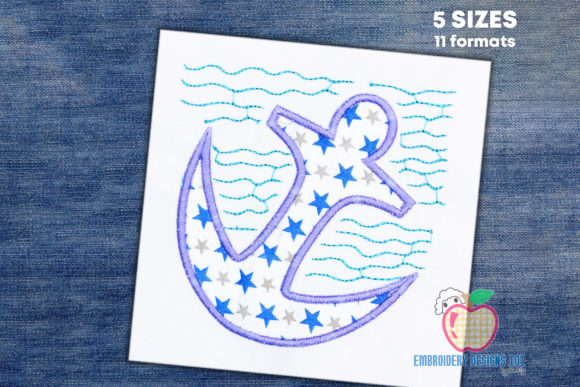
Anchor Applique: A Craft Fair-Ready Embroidery Design
First Impression: Rustic Charm with Timeless Appeal
As an embroidery designer who’s prepped over 200 craft fair booths, my first thought on seeing Anchor Applique is: “This lands right in the sweet spot.” It’s not overly nautical-cliché, nor is it so minimalist it disappears—it reads as rustic, confident, and quietly premium. The word “anchor” evokes stability, journey, and coastal heritage—perfect for handmade markets where shoppers seek meaning, not just motif. Unlike trendy icons that fade after a season, Anchor Applique feels like a small shop product with staying power: think farmhouse aprons, linen tea towels, or vintage-style market bags.
Where Anchor Applique Shines On Real Craft Fair Products
In my booth setup—tote bags stacked upright, aprons draped over a ladder shelf, tea towels folded beside embroidered pillow covers—Anchor Applique performs strongest when used intentionally, not everywhere. Here’s how it plays out:
- Tote bag design: Centered on the front panel of a natural canvas tote, it reads clearly from six feet away—bold enough to catch eyes but refined enough to avoid looking like a souvenir stall.
- Apron embroidery: Placed just above the pocket on a denim or heavyweight cotton apron, it adds artisanal weight without overwhelming the garment’s function.
- Tea towel embroidery: Smaller-scale placement (3–4 inches wide) on a flour-sack or Belgian linen towel gives warmth and cohesion—especially when paired with matching dish cloths or oven mitts.
- Embroidered patch: As a sew-on or iron-on patch, Anchor Applique works beautifully on denim jackets, backpacks, or kids’ caps—ideal for cross-selling at craft fairs.
- Pillow cover & pouch accents: At 2.5–3.5 inches wide, it anchors (pun intended) a neutral linen pillow or drawstring fabric pouch without competing with texture or pattern.
What Makes This Machine Embroidery Design Sell—And What Requires Caution
Anchor Applique succeeds because it’s immediately legible. No decoding needed. Customers scanning your booth don’t pause to interpret—it says “anchor,” it feels intentional, and it signals craftsmanship. That clarity also translates online: it photographs cleanly on white or oat-colored fabric, holds contrast well in natural light, and scales reliably across printable mockups for Etsy listings.
But here’s where real-world production kicks in: Anchor Applique isn’t foolproof. Its shape includes curved lines and a defined ring—details that can blur on textured towels or dense fabrics like heavy twill. On dark fabric, thread contrast becomes critical: a navy anchor on black canvas may vanish unless you choose bright ecru or cream thread. And on curved cap surfaces? It’s doable—but only if your hoop size allows smooth tension and your stabilizer prevents puckering.
Production Notes Every Embroidery Business Owner Should Check
Before stitching your first batch, treat Anchor Applique like any high-value digital embroidery file:
- Test on scrap fabric that matches your final product—especially if using terry cloth, burlap, or quilt-weight cotton.
- Review stitch density: If the design packs tight satin stitches into the anchor’s shank or fluke, consider reducing density slightly for breathable fabrics like linen.
- Confirm hoop size compatibility—some versions of this machine embroidery design may require a 5x7" hoop minimum; verify before loading into your commercial embroidery machine.
- Use cutaway or tear-away stabilizer wisely: For tea towel embroidery, lightweight tear-away keeps the back soft. For caps or structured pouches, medium-weight cutaway prevents shifting.
- Create at least one real mockup—not just a digital preview. Hold it up next to your other bestsellers. Does it hold its own? Does it feel cohesive with your brand palette?
- Compare fabric colors side-by-side: An off-white thread on oat linen reads warm and handmade; the same thread on ivory polyester reads cold and synthetic.
- Confirm commercial licensing before selling finished products. Since Anchor Applique is marketed as a Transportation-category Embroidery design, double-check whether resale rights are included—or if you need separate permission for physical goods.
How Anchor Applique Strengthens Your Booth—and Your Brand
This isn’t just another embroidery file. When placed thoughtfully, Anchor Applique elevates perceived value. A customer paying $38 for an embroidered apron doesn’t just buy utility—they buy narrative. That anchor whispers “handmade with care,” “designed for purpose,” and “made to last.” In a sea of laser-cut wood signs and glitter mugs, it stands out by being quietly confident, not loud.
For Etsy sellers and small shop owners, Anchor Applique supports consistency: use it across three product types (e.g., tea towel + pouch + patch), and customers begin recognizing your visual language. That builds trust—and repeat buyers. At craft fairs, it draws the kind of shopper who lingers, asks about thread brands, and buys two instead of one.
Final Thought: Anchor Applique Is a Workhorse—Not a Gimmick
Some designs dazzle once and disappear. Anchor Applique is different. It’s versatile enough for coastal boutiques and Midwest farmstands alike. It’s simple enough for beginners to execute cleanly, yet distinctive enough for seasoned designers to build collections around. As a craft fair product, it doesn’t shout—it invites. And in handmade markets, where attention is scarce and intention matters, that invitation is everything.
If you’re curating embroidery assets for your next launch, don’t overlook Anchor Applique. Just remember: respect the fabric, test the thread, honor the stabilizer—and let the design do what it does best: hold steady, stand out, and sell.